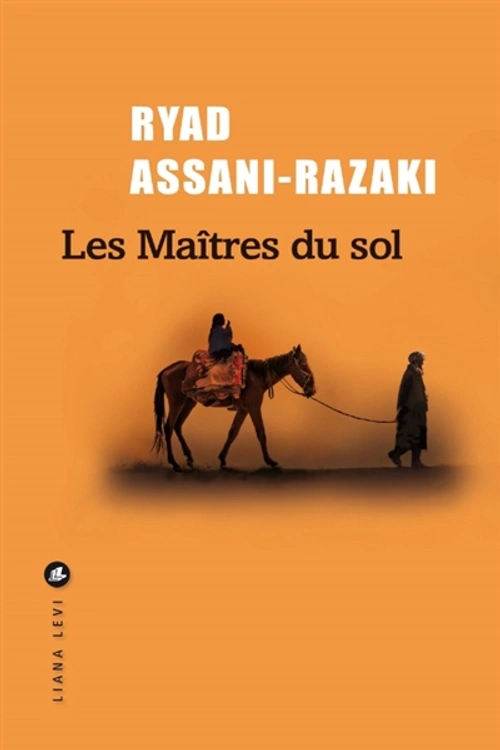
Aldea is a fishing village on the coast of present-day Ghana, at the end of the fifteenth century. In its streets, a drunk man has killed an oburoni, one of the armed merchants who came from Portugal. The village hunts him down. Above it, on the cliff, stands the strangers’ fortress. Every season, from behind those walls, they weigh a little more heavily on the kingdom’s affairs. The omanhene no longer rules alone. The elders are worried, but nobody can yet name what is changing.
Ryad Assani-Razaki catches history at the moment when nothing is settled. The novel takes place before the Atlantic slave trade, before colonisation had a name. What it tells is a first fracture: the day land stops being an inheritance and becomes a commodity, and the balance of the world begins to tilt. The story moves from the coast of Elmina to the libraries of Timbuktu. It reminds us that West Africa did not wait for Europe in order to think, write and trade. It already had its own knowledge, routes, rivalries and forms of power.
The book is long, close to five hundred pages. It is at once a manhunt, a political chronicle and a novel of ideas. It does not turn the Portuguese into monsters, nor the kingdom into a paradise before the fall. Its question reaches beyond the past: who owns the land, and how can a people take back what was taken from it?
Susu editorial note
A writer born in Cotonou and living in Montreal writes about the Gold Coast at the end of the fifteenth century. That shift alone says something: the history of the Gulf of Guinea reads across borders that were drawn much later. Les Maîtres du sol goes back to the moment before the Atlantic slave trade. It is in dialogue with Yaa Gyasi’s Homegoing, already in the library, which starts from the forts of the same coast. At a time when questions of land and sovereignty are coming back across the continent, this novel asks us to look at where they began rather than at what they left behind.